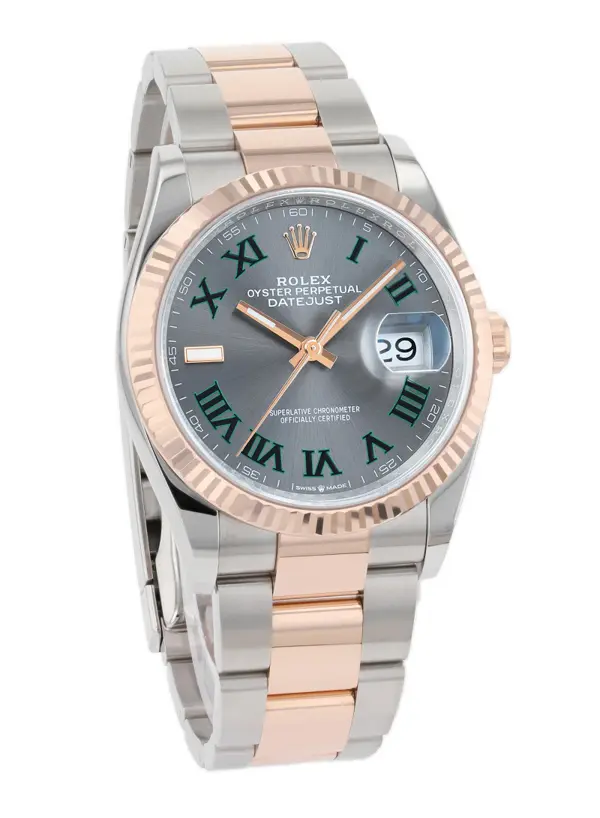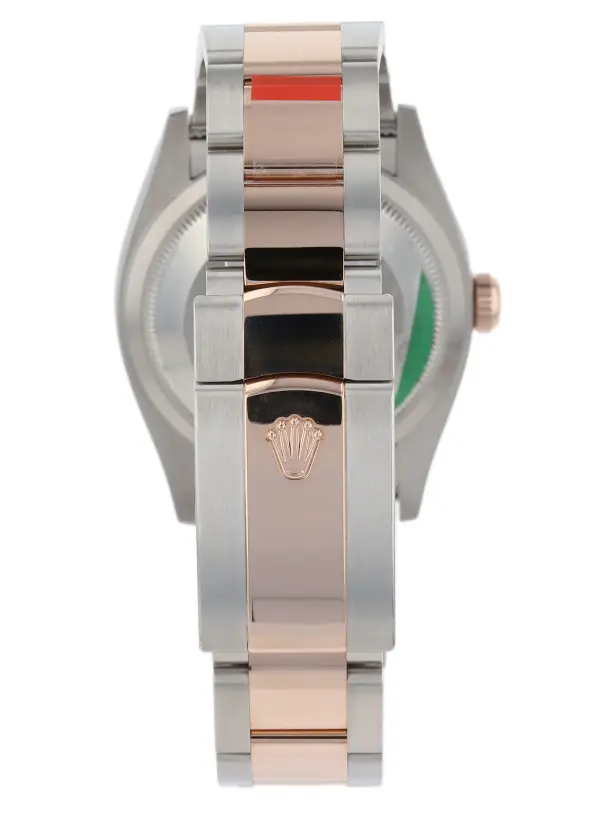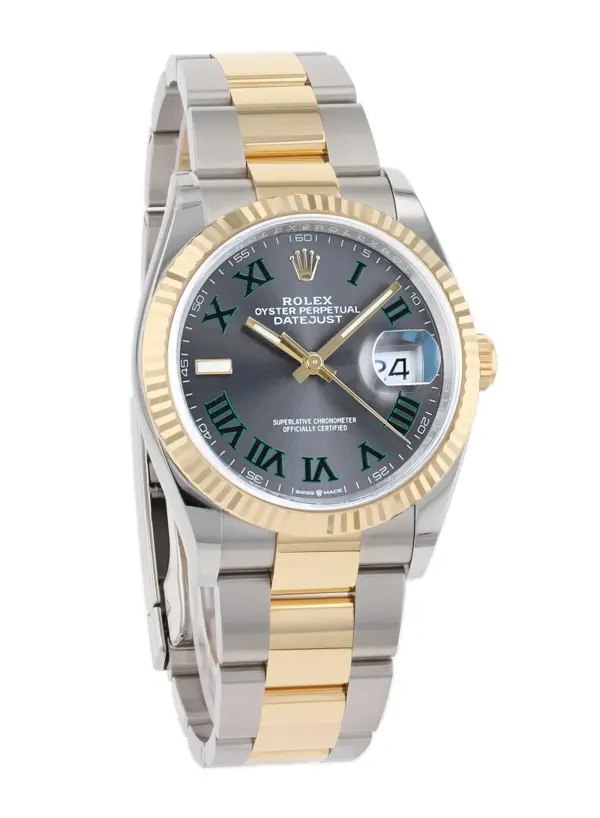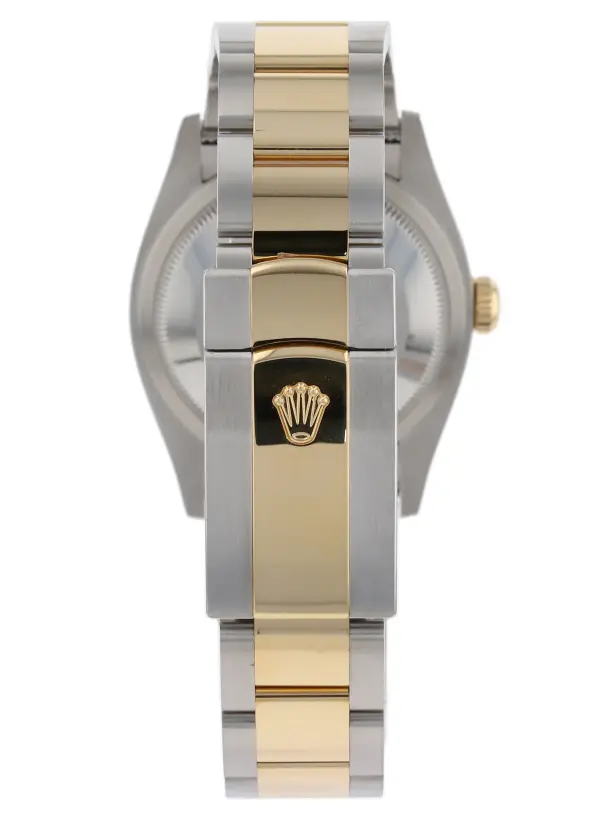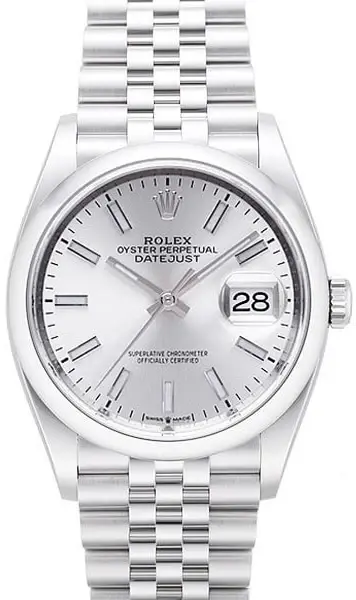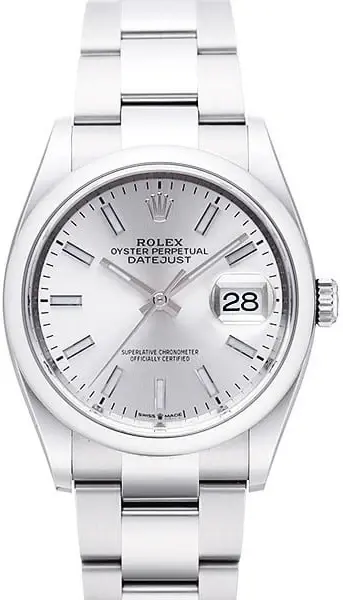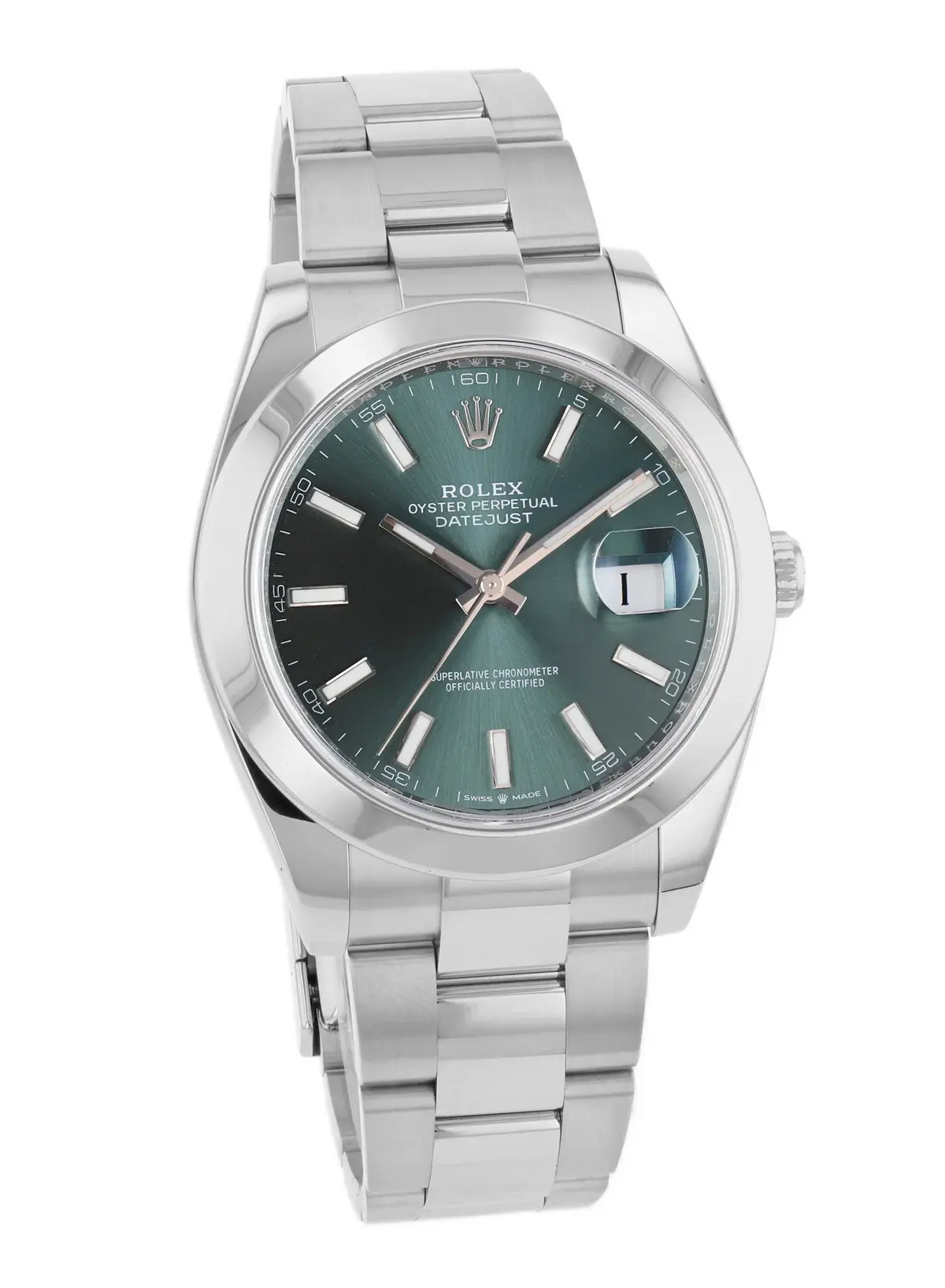
The Rolex Datejust is one of the most versatile watches ever made: dressy enough for a suit, robust enough for every day. The hardest decision most buyers face is not the dial or the bezel, but the size. Should you choose the classic 36 mm or the larger 41 mm?
This guide compares the Rolex Datejust 36 vs 41 on fit, movement, design options and value, and ends with a simple way to decide which one is right for you.
A short history
The Datejust was introduced in 1945 as the first self-winding wristwatch to show the date in a window on the dial. For most of its life it was a 36 mm watch, which was considered a standard men's size for decades.
As tastes moved towards larger watches, Rolex added a bigger Datejust. Today's Datejust 41 is the modern large version, while the Datejust 36 keeps the classic proportions. Smaller sizes (31 mm and 28 mm) exist too.
Datejust 36 vs 41 at a glance
| Datejust 36 | Datejust 41 | |
|---|---|---|
| Case diameter | 36 mm | 41 mm |
| Steel reference (current) | 126200 (smooth bezel) | 126300 (smooth bezel) |
| Movement | Rolex calibre 3235 | Rolex calibre 3235 |
| Power reserve | About 70 hours | About 70 hours |
| Water resistance | 100 m | 100 m |
| Bracelets | Oyster or Jubilee | Oyster or Jubilee |
| Bezels | Smooth or fluted | Smooth or fluted |
| Character | Classic, versatile, understated | Modern, more presence |
The most important line in that table is the movement: both sizes use the same calibre 3235, with the same accuracy standard and power reserve. You are choosing a size and a look, not a better or worse watch.
Size and fit: the real difference
Five millimetres sounds small, but on the wrist it changes the character of the watch.
The Datejust 36 looks classic and balanced. It suits smaller and medium wrists perfectly, and many people with larger wrists also choose it for its vintage proportions and the way it slides under a shirt cuff.
The Datejust 41 has more presence. The dial is noticeably larger, which makes it easier to read and gives it a more contemporary look. It suits medium and larger wrists, and people who are used to modern sports watches.
A few practical tips:
- Look at the lug-to-lug length, not only the diameter. It decides whether the lugs overhang the edges of your wrist.
- The bracelet changes the look. The Jubilee bracelet makes a watch look dressier and slightly smaller; the Oyster bracelet looks sportier and a little bolder.
- The bezel changes it too. A fluted bezel catches the light and makes the watch look larger and dressier than a smooth bezel of the same size.
- If you can, try both. Photos of a watch on a wrist are misleading, because the camera angle changes the apparent size.
Bezels, bracelets and materials
Both sizes come in the same broad combinations, which is one reason the Datejust has so many references:
- Oystersteel with a smooth bezel: the simplest and most understated version.
- White Rolesor: steel with a fluted bezel in 18 ct white gold. It looks like steel from a distance but catches the light.
- Yellow Rolesor and Everose Rolesor: steel combined with yellow or Everose gold on the bezel, crown and bracelet centre links.
- Oyster or Jubilee bracelet, depending on the reference.
Our guide on how to read Rolex reference numbers explains how to tell these versions apart from the reference alone.
Dials
The Datejust comes with more dial options than almost any other Rolex: different colours, sunray and matte finishes, stick or Roman markers, and some with diamonds. The dial is usually not part of the reference, so always check the dial description in each listing.
A practical point: some dial colours look very different in photos than in daylight. Ask the seller for a photo near a window if you are unsure.
Smaller sizes: Datejust 31 and 28
The Datejust is also made in smaller sizes, 31 mm and 28 mm. They share the same design language, with the same bezel, bracelet and dial options in smaller proportions. They suit slim wrists and anyone who prefers a jewellery-like watch. If you are choosing for a smaller wrist and even the 36 mm feels large, look at the Datejust 31.
What to check on a pre-owned Datejust
A pre-owned Datejust can be excellent value. A few points deserve a closer look:
- The bracelet. Jubilee bracelets in particular can loosen between the links with years of wear. Ask how the bracelet feels, and whether the extra links are included.
- The fluted bezel. Fluted gold bezels are soft metal and can show wear on the ridges. Light wear is normal; heavy flattening is not.
- The crystal and Cyclops. Check for chips at the edge of the crystal and around the Cyclops lens.
- The dial. Make sure it is the dial described in the listing, and that it is original to the watch.
- Polishing. Ask whether the case has been polished; sharp case edges are a sign it has been polished lightly or not at all.
- Papers and year. Check the warranty date and whether the box and papers are included.
Datejust or Oyster Perpetual?
If you are looking at the Datejust, you will probably also come across the Oyster Perpetual. The two look similar, but they are different watches:
| Datejust | Oyster Perpetual | |
|---|---|---|
| Date | Yes, with the Cyclops lens | No date |
| Bezel options | Smooth or fluted, in steel or gold | Smooth steel |
| Materials | Steel, and steel combined with gold | Steel |
| Dials | Very wide range, including Roman numerals and diamonds | Plainer dials, often in bold colours |
| Character | Classic, dressier, many combinations | Pure, sporty-simple |
Choose the Datejust if you want a date, a fluted bezel or a dressier look. Choose the Oyster Perpetual if you want the simplest Rolex, with a clean dial and no date. The Oyster Perpetual is also made in several sizes, including 36 mm and 41 mm.
Choosing a dial you will not tire of
The Datejust's range of dials is a pleasure and a trap: it is easy to fall for a colour in a photo and tire of it after a year. A few practical tips:
- Silver, black, blue and grey are the most versatile and match any clothing.
- Sunray dials change with the light, from bright to dark. They look more dynamic but also more formal.
- Stick markers read more modern; Roman numerals read more classic.
- Diamond markers make a Datejust dressier; think about whether you will wear it every day.
- Bold colours, such as green or bright blue, are fun but more personal. They suit a second watch as much as a first.
Value and demand
Both sizes are popular. Demand varies by reference, dial and bracelet, and it changes with the market, so we do not quote prices in articles. You can see current prices for every watch in our Datejust 36 and Datejust 41 collections, each with its condition, year and box and papers stated.
If you plan to resell one day, a full set helps. See why box and papers matter.
Datejust 36 or 41: how to choose
Choose the Datejust 36 if:
- you like classic, timeless proportions;
- your wrist is small or medium, or you want the watch to sit under a shirt cuff;
- you want the most versatile Datejust for both formal and casual wear.
Choose the Datejust 41 if:
- you are used to modern sports watches and want a similar presence;
- your wrist is medium to large;
- you prefer a larger, easier-to-read dial.
Still undecided? Choose by the watches you already own. If your favourite watch is 38–40 mm, the 36 will feel refined and the 41 will feel familiar. If you usually wear 42 mm or more, the 41 will probably feel right.
Buying a Datejust safely
Check the exact reference, the dial described in the listing, the condition, the year and whether the box and papers are included. Every watch we sell is checked by our specialist before it ships. For the full checklist, read how to buy a luxury watch online safely.
Shop the Datejust 36, the Datejust 41, or the full Rolex collection.
Frequently asked questions
Is the Datejust 36 too small for a man?
Not at all. For most of its history the Datejust was a 36 mm watch, and it remains a very popular men's size. It depends on your wrist and your taste.
Do the Datejust 36 and 41 have the same movement?
Yes. Both current versions use Rolex calibre 3235, with a power reserve of about 70 hours.
Which is more popular, the Datejust 36 or 41?
Both are very popular, and demand depends more on the specific dial, bezel and bracelet than on the size alone.
Is the Datejust waterproof?
The Datejust is water resistant to 100 m, which is fine for swimming, as long as the crown is screwed down.
Jubilee or Oyster bracelet?
The Jubilee looks dressier and very comfortable; the Oyster is sportier and more robust in look. Both are available on both sizes.