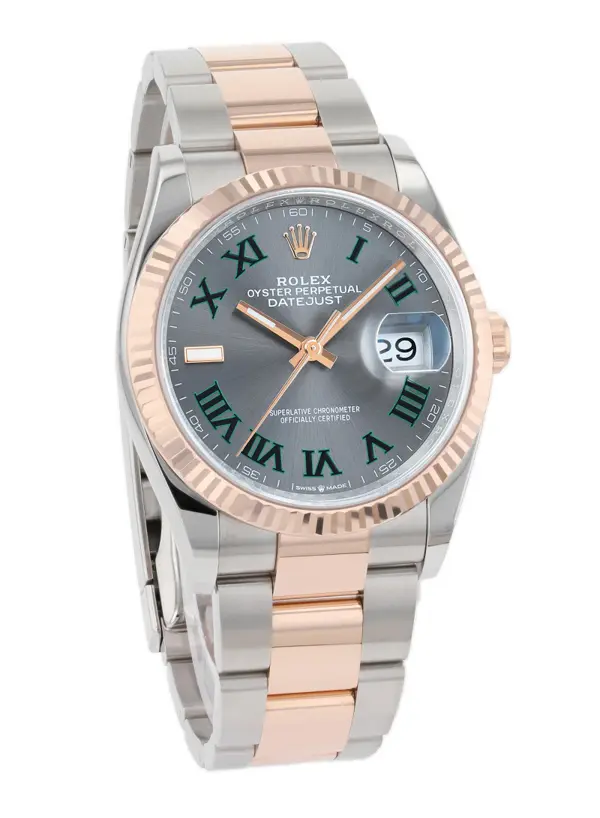
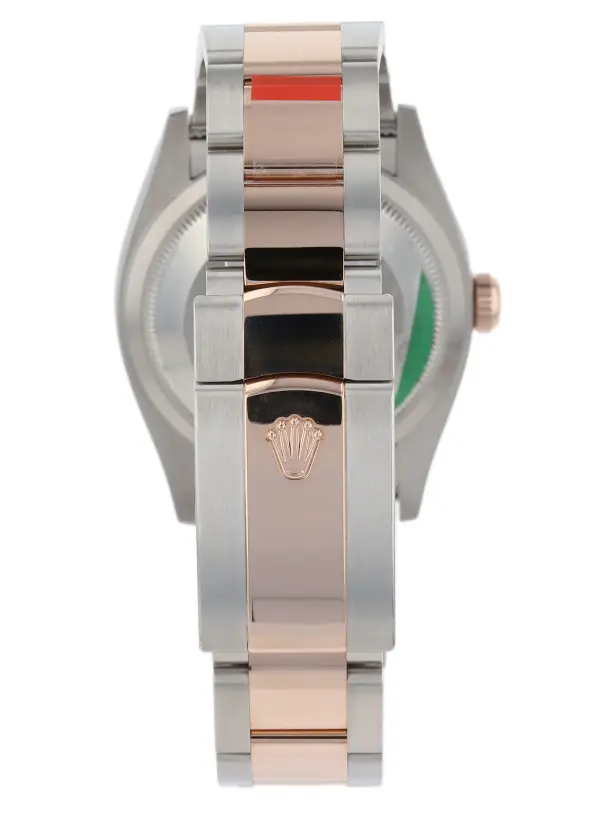
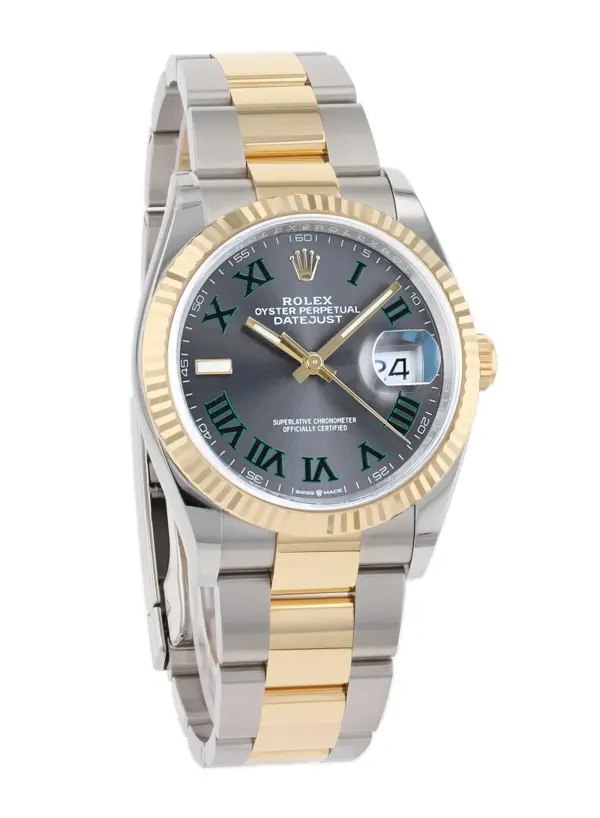
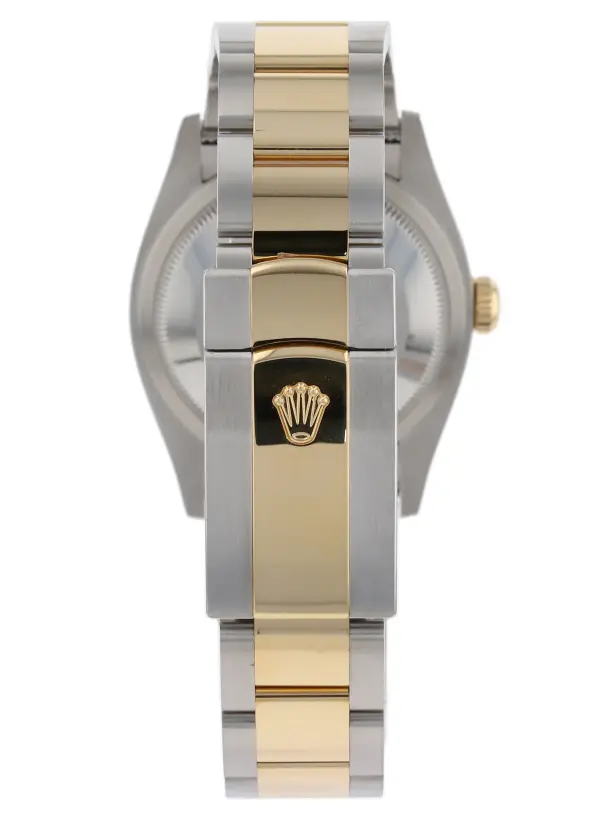
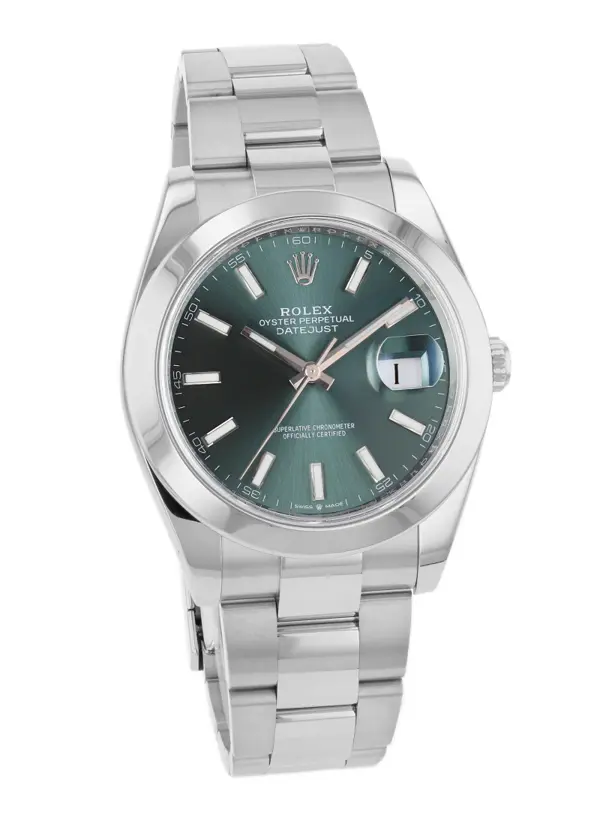
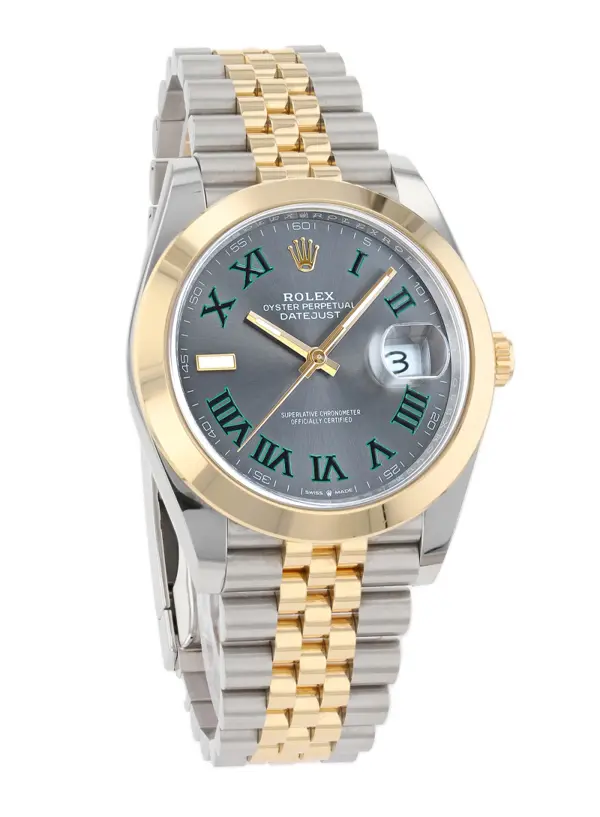
Every Rolex has a reference number, and learning to read it is one of the most useful skills for buying one. The reference tells you the model family, the generation, the bezel and the material, often before you have looked closely at the photos. It is also the best way to compare prices, because two watches that look alike can be very different references.
This guide explains how to read Rolex reference numbers in simple steps, with examples from well-known models.
Reference number vs serial number
These two are often confused:
- The reference number identifies the model: every steel Datejust 41 with a smooth bezel shares the same reference.
- The serial number identifies one individual watch, like a fingerprint.
The reference appears on the papers and, on modern watches, between the lugs at 12 o'clock under the bracelet. The serial number is on the papers and, on modern Rolex watches, engraved on the rehaut (the inner ring around the dial) at 6 o'clock. When you share photos online, it is common to cover part of the serial number, but never the reference.
The structure of a modern reference
Modern Rolex references usually have six digits, sometimes followed by letters. Take the steel Submariner Date, 126610LN:
| Part | 12661 | 0 | LN |
|---|---|---|---|
| Meaning | Model family and generation | Material | Bezel colour |
Reading from left to right, the digits move from the general (which model) to the specific (which metal, which colour).
The first digits: model and generation
The first digits identify the model family and its generation. A few current examples:
| Reference | Model |
|---|---|
| 124060 | Submariner (no date) |
| 126610LN | Submariner Date |
| 126710BLNR | GMT-Master II |
| 126500LN | Cosmograph Daytona |
| 126200 | Datejust 36 |
| 126300 | Datejust 41 |
| 228235 | Day-Date 40 |
The generation shows in the length and the first digits. Older Rolex references had five digits, for example a Submariner Date 16610. The next generation added a digit in front (116610), and the current generation changed it again (126610). If you know the family, the first digits tell you roughly how old the design is.
The second-to-last digit: the bezel (in many families)
In many model families, the digit before the last describes the bezel. In the Datejust, for example, 126300 has a smooth steel bezel, while 126334 has a fluted bezel in white gold. Rolex does not apply the same pattern to every family, so use this as a guide rather than a rule.
The last digit: the material
The last digit of the six tells you the material of the case. This is the most useful digit to learn:
| Last digit | Material | Example |
|---|---|---|
| 0 | Oystersteel (stainless steel) | 126610LN Submariner Date |
| 1 | Everose Rolesor (steel and Everose gold) | 126331 Datejust 41 |
| 3 | Yellow Rolesor (steel and yellow gold) | 126333 Datejust 41 |
| 4 | White Rolesor (steel and white gold) | 126334 Datejust 41 |
| 5 | 18 ct Everose gold | 228235 Day-Date 40 |
| 6 | Platinum | 228206 Day-Date 40 |
| 8 | 18 ct yellow gold | 228238 Day-Date 40 |
| 9 | 18 ct white gold | 228239 Day-Date 40 |
So a Datejust ending in 0 is steel, one ending in 3 is steel and yellow gold, and a Day-Date ending in 8 is solid yellow gold. This alone explains much of the price difference between watches that look similar in photos.
The letters: bezel colours and dials
Letters after the digits usually describe the bezel colours, and come from French words. The most common:
| Suffix | Meaning | Example |
|---|---|---|
| LN | Lunette Noire: black bezel | 126610LN Submariner Date |
| LV | Lunette Verte: green bezel | 126610LV Submariner Date |
| LB | Lunette Bleue: blue bezel | 126613LB Submariner Date, two-tone |
| BLNR | Bleu/Noir: blue and black bezel | 126710BLNR GMT-Master II |
| BLRO | Bleu/Rouge: blue and red bezel | 126710BLRO GMT-Master II |
| CHNR | Chocolat/Noir: brown and black bezel | 126711CHNR GMT-Master II |
Collectors also give many models nicknames based on these colours. Nicknames are useful for searching, but always confirm the reference, because one nickname can cover several generations.
The dial is not always in the reference. A Datejust 126300, for example, is made with many dial colours and styles under the same reference. That is why listings also describe the dial, and why you should check the dial in the photos against what the listing says.
A worked example: reading three references
Let's put the rules together on three real references.
126610LN
- 12661 → the current Submariner Date family.
- Last digit 0 → Oystersteel.
- LN → black bezel.
- Result: a steel Submariner Date with a black bezel.
126334
- 12633 → the current Datejust 41 family, with a fluted bezel (the 3 before the last digit).
- Last digit 4 → White Rolesor: steel with white gold (the fluted bezel).
- Result: a steel Datejust 41 with a white gold fluted bezel. The dial is described separately.
228238
- 22823 → the current Day-Date 40 family.
- Last digit 8 → 18 ct yellow gold.
- Result: a solid yellow gold Day-Date 40.
Once you have read a few, you will be able to scan a list of references and immediately see which are steel sports watches and which are gold dress watches.
Older references: four and five digits
Before the six-digit era, Rolex used shorter references. The logic is similar, but the digits are fewer:
- Five-digit references, such as 16610 (Submariner Date) or 16233 (Datejust in steel and yellow gold), come from the generation before the current six-digit models. The last digit still usually indicates the material.
- Four-digit references, such as the classic Submariner 5513, come from older, vintage watches. These follow different conventions, and the details vary by model and period.
For vintage watches, the reference is only the start: specialists also look at dial variations, parts and service history. If you are buying vintage, ask for a detailed description of what is original.
Common mistakes
- Comparing different generations. A 116610 and a 126610 are both Submariner Dates, but different generations with different movements and details. Their prices are not directly comparable.
- Ignoring the material digit. A Datejust ending in 0 and one ending in 3 can look alike in a small photo; one has gold on the bezel and bracelet.
- Trusting the nickname. Search results for a nickname often mix several references. Always confirm the full reference.
- Forgetting the dial. The same reference can have very different dials, and dials affect price.
What the reference does not tell you
A reference is powerful, but it describes the model, not the individual watch. For that, you need the rest of the listing. The reference does not tell you:
- The year of production. Two watches with the same reference can be several years apart. The warranty card or the seller should tell you the year.
- The condition. New, unworn and pre-owned watches share the same reference. Read the condition grade and look at the photos.
- Whether it is complete. Box, papers, extra links and tags are separate from the reference. See why box and papers matter.
- The service history. Whether the watch has been serviced or polished, and by whom, is part of the watch's story, not its reference.
- The exact dial, for many models, as explained above.
That is why the best listings combine the reference with the condition, year, set and photos of the actual watch.
How to use the reference when you buy
- Search by reference, not by name. "Submariner" covers decades of watches; "124060" is one specific model.
- Compare prices only between identical references, in the same condition, with or without box and papers.
- Check the watch matches the reference. The bezel, the material and the size in the photos should match what the reference says. A mismatch is a reason to ask questions. Our guide on how to spot a fake Rolex explains why.
- Check the papers. The reference on the warranty card should match the watch. See why box and papers matter.
Find a Rolex by reference
Every listing on our site shows the manufacturer's reference next to the title. You can search by reference in the search bar (try "126300" or "124060"), or browse the Rolex collection, the Submariner and the GMT-Master II.
Frequently asked questions
Where is the reference number on a Rolex?
On the warranty card and, on modern watches, engraved between the lugs at 12 o'clock, under the bracelet. The listing should always state it.
What does the last digit of a Rolex reference mean?
It usually indicates the material: 0 for steel, 1 for Everose Rolesor, 3 for yellow Rolesor, 4 for white Rolesor, 5 for Everose gold, 6 for platinum, 8 for yellow gold and 9 for white gold.
What does LN mean on a Rolex?
LN stands for Lunette Noire, French for black bezel. Other suffixes follow the same pattern, such as LV (green), LB (blue) and BLNR (blue and black).
Is the reference number the same as the serial number?
No. The reference identifies the model; the serial number identifies one individual watch.
Why do two Datejusts with the same reference look different?
Because the dial is often not part of the reference. One reference can come with many dial colours and styles, so check the dial description on the listing.