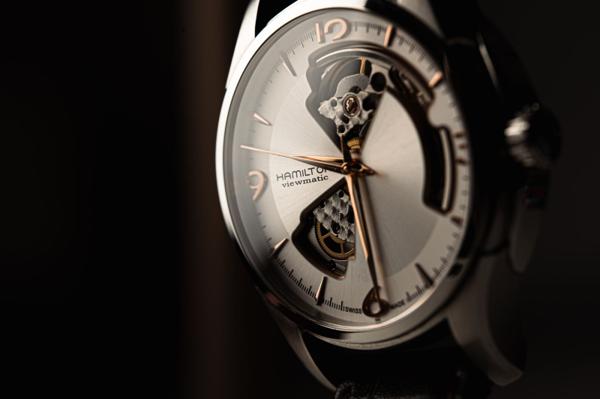
An automatic watch winds itself from the movement of your wrist, but it still needs winding by hand when it has stopped, and setting it the wrong way can damage the date mechanism. This takes two minutes to learn and applies to almost every mechanical watch we sell.
1. Start a stopped watch
If the watch has stopped, shaking it will get the seconds hand moving, but the mainspring will be almost empty and the watch will run poorly.
- If the crown is the screw-down type (most sport watches), unscrew it by turning it toward you until it pops out to its first position.
- With the crown in that first position, turn it away from you (clockwise) 30 to 40 times. You will feel light resistance and may hear a faint whirr. You cannot overwind an automatic: a clutch slips when the spring is full.
- The watch now has a good reserve and your wrist will keep it topped up.
2. Set the date safely
On most watches, pulling the crown to the next position lets you change the date quickly. One rule matters:
Do not use the quick date change while the hands are between about 9 pm and 3 am. In those hours the watch's own date mechanism is engaged, and forcing the date can bend or break a part.
The safe routine, every time:
- Pull the crown to the time-setting position and move the hands to 6:30.
- Push the crown in one click and set the date to the day before today.
- Pull the crown out again and advance the hands. When the date flips, you are at midnight; carry on to the correct time (go past 12 once more if it is afternoon).
Some modern movements are protected against this, but the routine costs nothing and works on every watch.
3. Set the time
- Advance the hands forward rather than backward when you can.
- For accuracy, stop the seconds hand at 12 (most watches "hack": the seconds stop when the crown is pulled), set the time a minute ahead, and push the crown in on a time signal.
4. Close the crown
Push the crown fully in. On a screw-down crown, press gently and turn away from you until it is snug. Do not force it. If the thread does not catch smoothly, back off and try again. A crown left unscrewed is the most common reason water gets into a watch; see water resistance explained.
GMT, chronograph and calendar watches
- GMT watches: the crown usually has an extra position that moves the hour hand in one-hour jumps. The date follows the local hour hand, forward and back.
- Chronographs: do not press the pushers under water unless the manual says you can, and unscrew screw-down pushers first.
- Annual and perpetual calendars: follow the maker's instructions exactly, or ask us. Setting these wrongly can mean a trip to the watchmaker.
How long will it run off the wrist?
That is the power reserve. Many watches run about 40 hours; modern Rolex, Tudor and Omega movements run 55 to 72 hours, enough to take the watch off on Friday and find it running on Monday. If you rotate several watches, either wind and set each time or use a watch winder.
When something feels wrong
A gritty crown, a date that changes at noon, a watch that gains or loses minutes a day: these are signs it needs attention. Read how often to service a luxury watch, or ask our specialist.
Frequently asked questions
How many times should I wind an automatic watch?
About 30 to 40 turns of the crown from a full stop. After that, wearing it keeps it wound.
Can you overwind an automatic watch?
No. Automatic movements have a slipping clutch that prevents overwinding. Hand-wound watches are different: stop when you feel firm resistance.
Why shouldn't I change the date at night?
Between roughly 9 pm and 3 am the date-change mechanism is engaged. Using the quick-set then can damage it.
My date changes at noon. What is wrong?
The hands are 12 hours out. Advance the time by 12 hours and the date will change at midnight.
Do I need a watch winder?
Not for a simple watch: winding and setting takes a minute. A winder is convenient for calendar watches that are tedious to reset.